

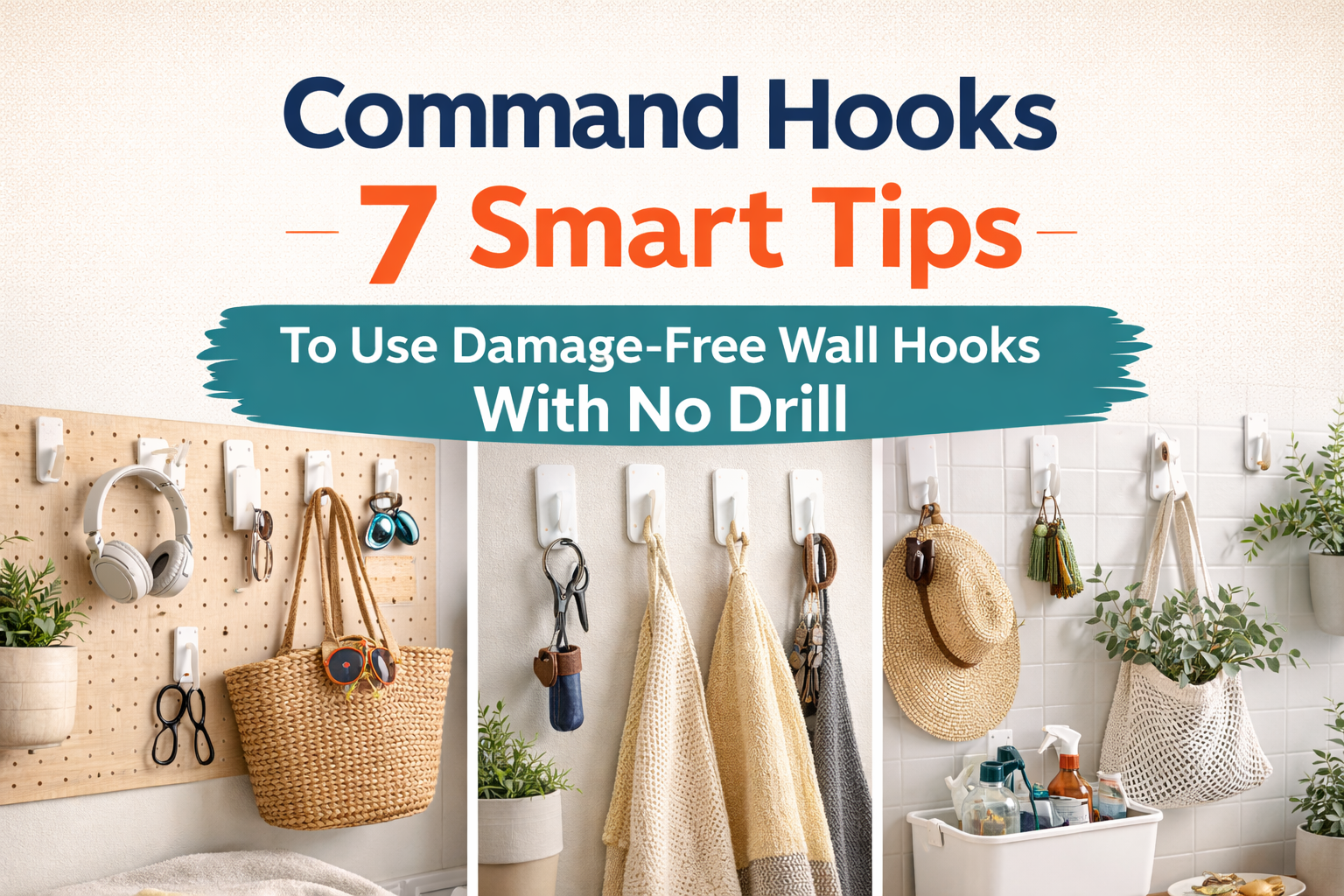
Command hooks, damage free hooks, wall hooks no drill have become must-have solutions for renters and anyone seeking easy, no-commitment home organization. If you need to hang, organize, or decorate without tools, landlord headaches, or wall repairs, you’re in the right place. This guide explains exactly when (and how) these no-drill hooks are game-changers—and what to watch out for.
Key Takeaways
- No-drill hooks excel for renters wanting flexibility, but adhesive performance depends on surface prep and environment.
- Best results come from installing on smooth, non-porous surfaces like glass and painted drywall; issues arise with humidity or dust.
- Innovations make heavy-duty damage-free hanging possible, but not all hooks are equal—read the fine print and test before trusting with valuables.
- What Makes Command Hooks, Damage Free Hooks, Wall Hooks No Drill Essential?
- How to Use Damage Free Wall Hooks: Step-by-Step for Renters
- Advanced Tips & Common Pitfalls for No-Drill Wall Hooks
- Recap & Smart Next Steps for Renter-Friendly Hanging
- FAQs: Command Hooks & Damage-Free Wall Hooks (No Drill)
What Makes Command Hooks, Damage Free Hooks, Wall Hooks No Drill Essential?
No-drill wall hooks have revolutionized how renters personalize homes, organize storage, and avoid wall damage. Traditional wall hooks and shelves often involve drills, screws, or nails—big no’s for leases or quick reconfiguring. Command hooks, removable adhesive wall hooks, and other damage free hooks stick on, hold surprising weight, and peel off cleanly when it’s time to move, redecorate, or return a security deposit.

The appeal is obvious: no tools, no dust, no regrets. Whether you want to hang towels in your bathroom, keys near the door, or create flexible kitchen storage, these hooks work for most renters and even homeowners needing temporary solutions. They’re a cornerstone for anyone looking at renter-friendly storage and no-drill organization strategies.
Market growth is enormous, with global sales projected to reach $3 billion in 2024, reflecting strong demand from the U.S. rental market and a rising number of affluent renters seeking easy, flexible solutions.[1]
How to Use Damage Free Wall Hooks: Step-by-Step for Renters
Getting the most out of command hooks and similar damage free hooks isn’t as simple as “stick and hang”—prep is everything. Here’s how to hang items safely and avoid the classic adhesive fails.
- Pick the right hook for your need.
Not all hooks are equal. Command makes many types, from clear mini-hooks for fairy lights to heavy-duty options that claim to hold over 10 pounds. Always check max weight and intended surface. - Prep the surface thoroughly.
Use isopropyl alcohol on a lint-free cloth to wipe glass, tile, painted drywall, or metal. Avoid using on textured or dusty surfaces; adhesive struggles to grip here according to market research. - Apply the hook with care.
Press for 30 seconds and, if possible, wait the recommended “cure” period (usually one hour, but sometimes overnight) before hanging anything. - Hang your item—but don’t exceed the weight limit.
Lightweight decor, utensils, or organizers are safest. If you want to try heavier loads (like over the door organizers or small shelves), test with something non-breakable first. - To remove, follow the instructions exactly.
Hold the hook so it doesn’t snap off, and pull the tab straight down (not toward you or sideways) to avoid paint or wall damage. If resistance is high, pause and gently wiggle rather than force it.
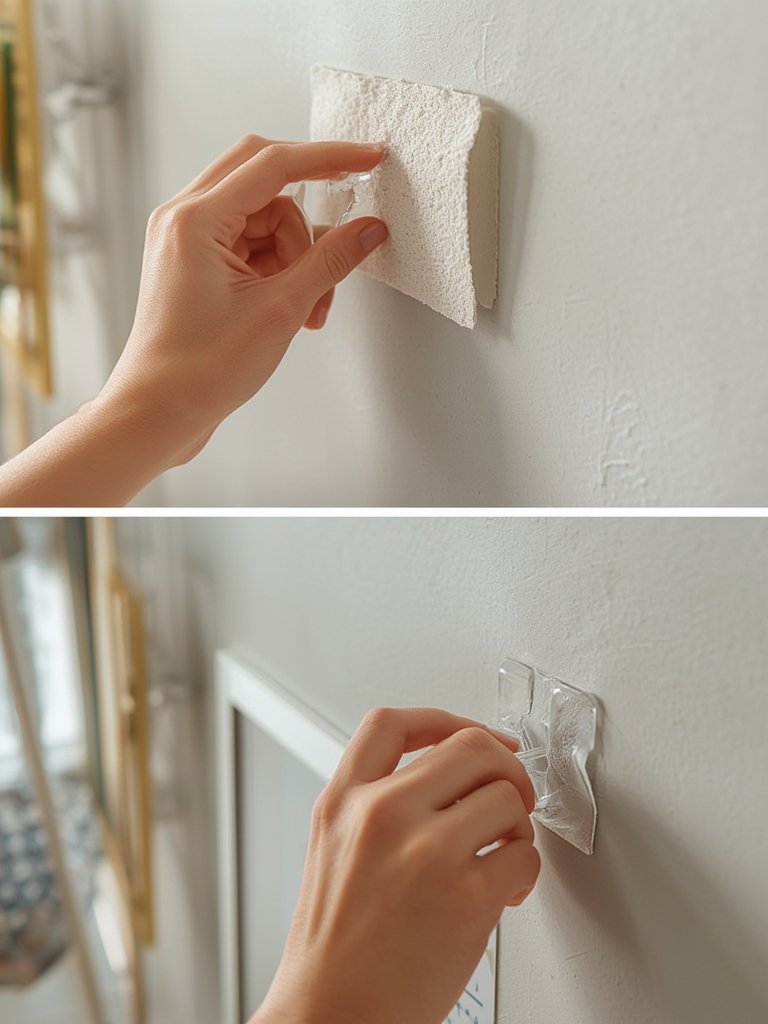
You can use this process on painted drywall, glass, tile, and metal. Just remember: performance drops if the surface is textured, uneven, or has unseen moisture. For true bathroom waterproofing, look for hooks labeled as “bath” or “moisture resistant”—and always apply to tile, not grout.
If you want full, renter-friendly storage transformations, consider pairing damage free hooks with solutions like over the door organizers, no-drill shelves, or space saving bags.
Advanced Tips & Common Pitfalls for No-Drill Wall Hooks
Not all adhesive hooks perform the same—and there’s no guarantee every wall in your rental will handle them equally well. Below are real-world challenges (drawn directly from recent research) and ways to avoid the most common issues.
| Surface | Adhesion Quality | Moisture Resistance | Notes |
|---|---|---|---|
| Glass/Tile/Metal | Excellent | Good, if dry during application | Select “bath” versions for steamy conditions; avoid grout lines |
| Painted Drywall (Smooth) | Very Good | Moderate | Test in an inconspicuous spot; remove slowly |
| Textured/Stucco/Wallpaper | Poor | Poor | Consider alternate hanging methods or renter-friendly shelves |
- Adhesive inconsistencies are the top complaint. On textured or dusty walls, hooks often fall off after weeks or fail to hold rated weight. Oily residue, humidity, or even variations in paint can cause issues, especially in bathrooms or kitchens.[2]
- Overloading is a common mistake. Most hooks are designed for lightweight needs: towels, utensils, keys, or modest organizers. If you need to store heavy pots or multi-tier organizers, try under sink organizers or shelved units for better support.
- Failing in humid environments. Unless a hook is specifically labeled as moisture-resistant, avoid placing it in showers, on grout, or walls that are often steamy. Even top brands underperform here, regardless of claims. Manufacturer details on moisture rankings are notably absent in current research.[3]
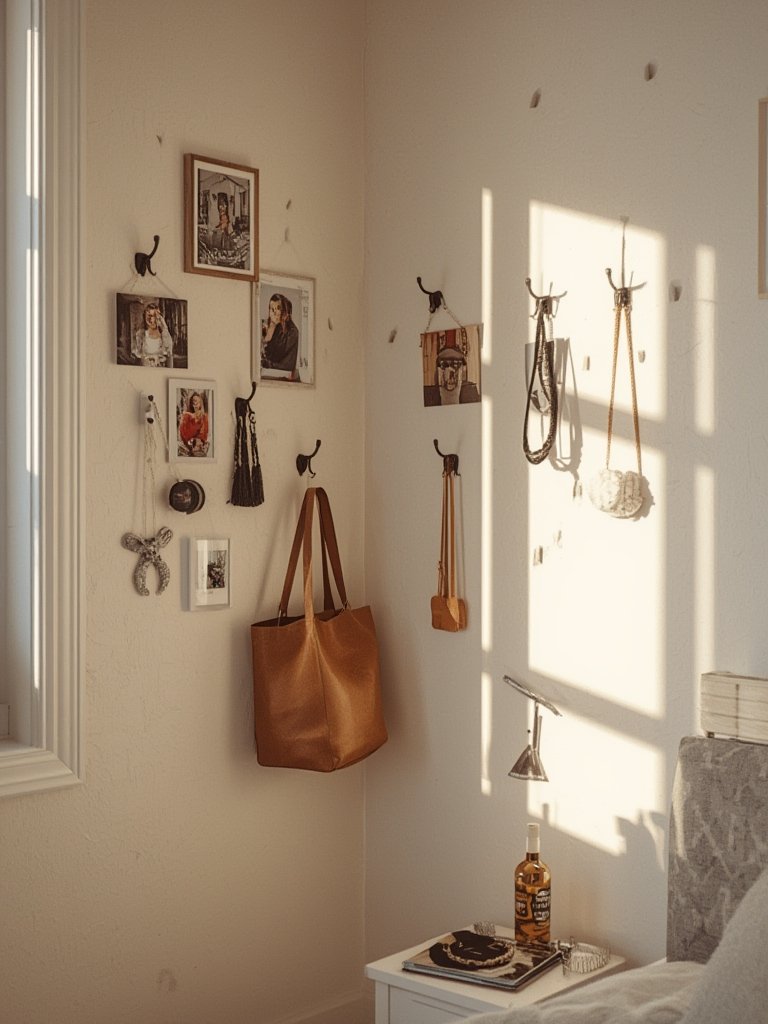
If you’re short on wall space or have tricky door frames, mix hooks with magnetic storage or stackable pantry containers for creative, renter-proof small space hacks.
Looking for heavy-duty, no-drill alternatives or a solution for wallpapered/porous walls? Explore tension rod shelving, over-the-door racks, or shelf units that use friction instead of adhesive for tool-free, damage-free organization.
Recap & Smart Next Steps for Renter-Friendly Hanging
No-drill hanging solutions like command hooks, damage free hooks, wall hooks no drill deliver serious benefits for renters—if you use them wisely and match the right product to your walls. Prep your surface, respect weight limits, and focus on glass, tile, or painted drywall for best results. For heavy or complex storage, combine adhesive hooks with removable shelves, organizers, or friction-mount options.
Ready to upgrade every space in your rental, condo, or dorm? Browse renter-friendly ideas—then start your next project confidently by picking quality, purpose-built hooks and following installation steps for a damage-free, frustration-free experience. For more strategies, see our guide to over the door organizers and no-drill shelving.
FAQs: Command Hooks & Damage-Free Wall Hooks (No Drill)
Do command hooks damage walls when removed?
If installed and removed carefully (always pull the tab straight down), most command hooks and similar damage free hooks won’t damage smooth painted walls, tile, or glass. Caution: misuse or skipping surface prep may peel paint or leave adhesive residue.
Why do no-drill hooks fall off walls?
The biggest reasons are poor surface prep (dust, oil, lint), humidity, rough/uneven walls, or overloading the rated weight. Ensure the surface is smooth and cleaned with isopropyl alcohol before applying.
Are there hooks safe for humid bathrooms?
Some brands offer moisture-resistant or waterproof adhesive hooks made for bathrooms. Always apply to clean, dry tile (not grout) and check that the product specifically says “bathroom use.”
How much weight can damage free hooks hold?
This varies widely. Small hooks hold up to 1 pound, while heavy-duty options may claim 5–10 pounds. Never exceed those limits, and always err on the side of lighter loads for humidity-prone areas.
Will command hooks work on all surfaces?
No—adhesive hooks perform best on smooth, non-porous surfaces like glass, painted drywall, and tile. They perform poorly (or fail) on textured, dusty, porous, or wallpapered surfaces.