

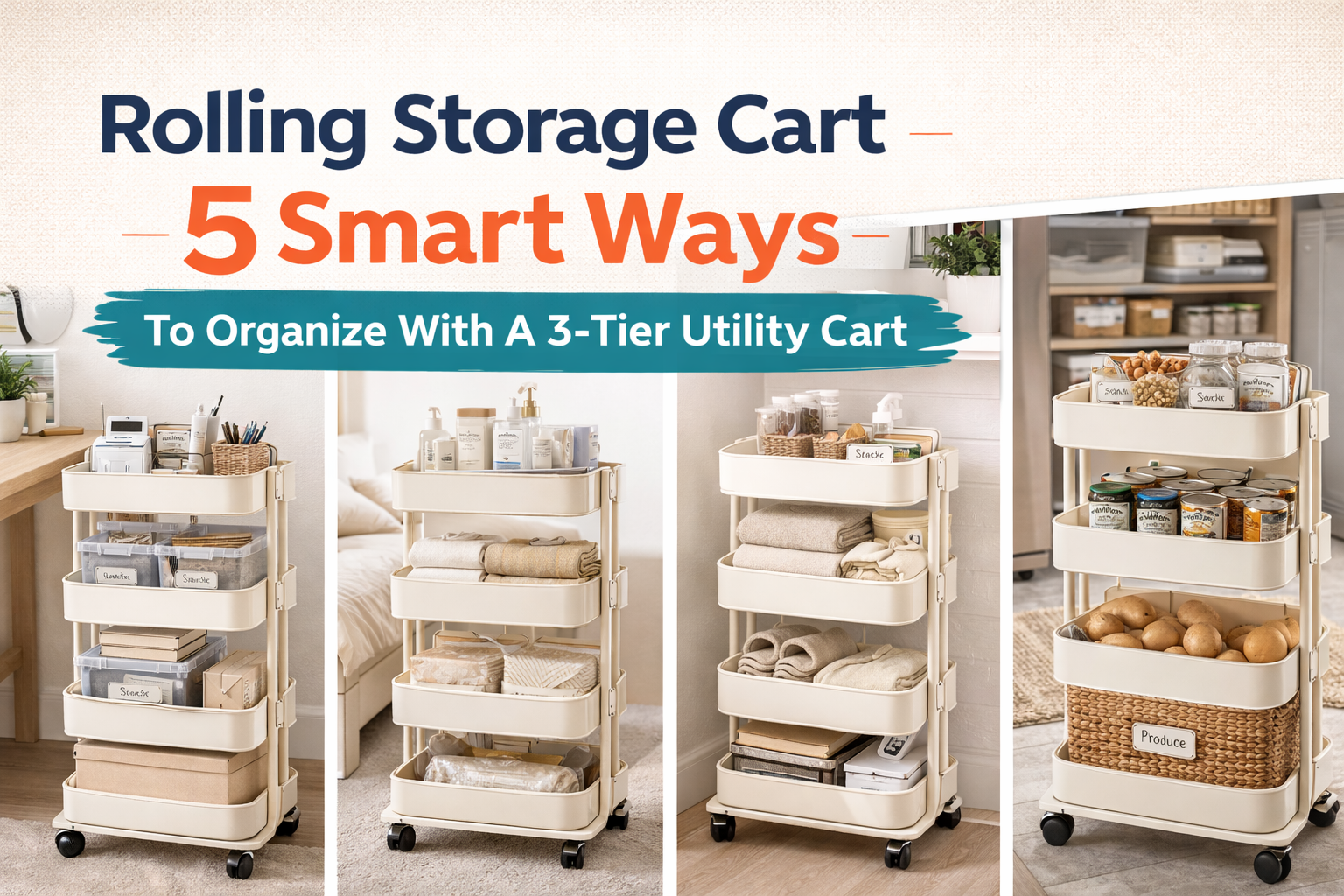
Rolling storage cart, utility cart, 3 tier rolling cart are the backbone of clutter-free, adaptable storage for homes, offices, and businesses. Whether you need flexible organization, easy mobility, or versatile utility, these carts solve storage headaches fast—if you choose wisely.
Key Takeaways
- Rolling storage carts and utility carts are growing fast, especially in the Asia-Pacific region, driven by industry and tight-space needs.
- Durability, low maintenance, and material choice (plastic vs. steel) are critical decision factors—many buyers underestimate these.
- Most competitor articles ignore price comparisons, real user pain points at home, and the importance of warranty or after-sales support.
- What is a Rolling Storage Cart or Utility Cart and Why Use One?
- Step-by-Step Guide: How to Select & Optimize Your 3 Tier Rolling Cart
- Advanced Analysis & Common Pitfalls: Rolling Cart Buyer’s Guide
- Conclusion
- FAQ
What is a Rolling Storage Cart or Utility Cart and Why Use One?
A rolling storage cart, utility cart, or 3 tier rolling cart is a mobile organizer on wheels—designed to help you move supplies, declutter tight spots, and make storage accessible where fixed shelves fall short. The market for these carts is booming, with one report placing the global rolling storage cart market at over $4.2 billion in 2024, and the utility cart segment growing steadily with a forecast upturn in healthcare, hospitality, and logistics (source).
Businesses and consumers alike are turning to rolling carts for:
- Rapidly changing storage needs (think: craft rooms, laundry, office, pantry, or retail stockrooms)
- Maximizing cramped or awkward spaces where shelving can’t go
- Reducing time spent moving or searching for scattered items
- Adding organization without committing to permanent furniture

Rolling storage carts come in countless shapes—flatbed utility carts move heavy boxes, multi-shelf carts keep supplies sorted, and slim models squeeze into the tiniest corners where no traditional organizer fits. Durability, maintenance, and ease of cleaning are big differentiators, especially for healthcare, food service, and crowded homes.
Step-by-Step Guide: How to Select & Optimize Your 3 Tier Rolling Cart
-
Decide what you’ll store and where your cart will go.
- Pencils, tools, and supplies? Aim for multi-shelf or 3 tier carts with lip edges.
- Heavy/large items? Go for a flatbed or Steel Frame Cart with higher weight capacity.
- Kitchen or bathroom? Prioritize easy-clean surfaces and corrosion resistance (plastic or coated steel).
-
Measure your space—especially doorway, corner, and under-shelf clearance.
- Look for carts no wider than your tightest path.
- Check that wheel height and cart handles will clear cabinet edges.
-
Compare material and build quality—don’t just trust product photos.
- Plastic carts: lightweight, won’t rust, but may sag with heavy loads.
- Steel or aluminum frames: far more durable but heavier, can scratch floors if poorly designed.
- Check for reinforced shelving, smooth-gliding caster wheels, and strong fasteners.
-
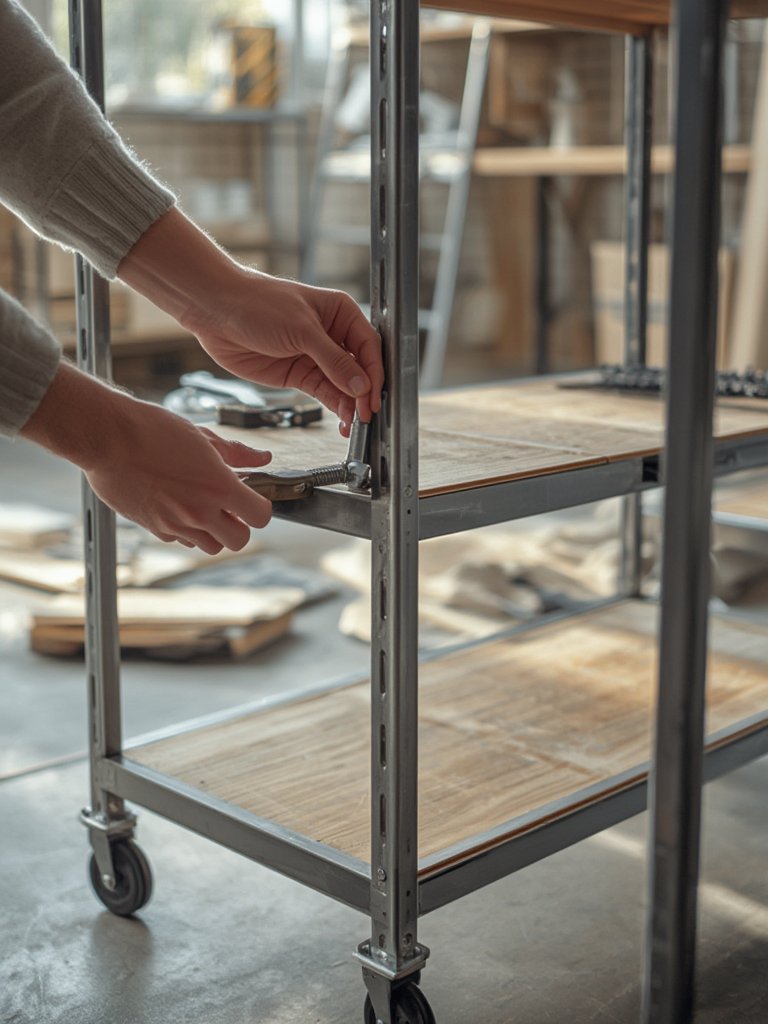
Consider assembly and maintenance needs.
- Do you need tools? Is the assembly process realistic for one person?
- Opt for carts rated “maintenance-free” where possible to avoid loose screws or stuck casters down the line (source).
-
Look for smart features:
- locking wheels for stability and safety
- Removable or adjustable shelves to fit odd sizes
- Ergonomic handles, see-through bins, or even foldable frames (source).
-
Don’t skip customer support details.
- If brands offer clear warranties or no-hassle returns, you dodge future headaches—most users forget to check this upfront!
- For the kitchen: Convert a rolling cart into a mobile pantry with airtight pantry containers and stackable bins.
- For bathrooms or under sink chaos: Pair your cart with plumbing-friendly under sink organizers or drawer dividers for tailored storage that rolls out of sight.
- For crafts or office: Divide each tier with drawer dividers to prevent small items from mixing during moves.
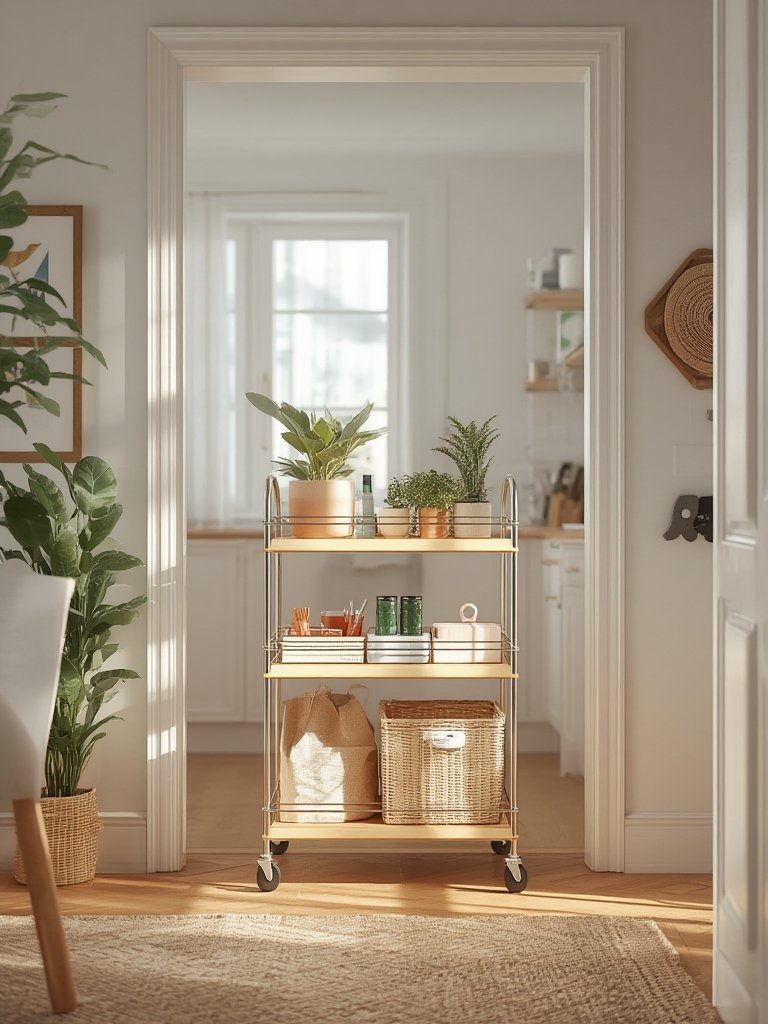
Rotate carts between rooms as needs change—3 tier rolling carts are especially suited for “task stations”: today’s craft center, tomorrow’s mobile cleaning caddy, next week’s coffee bar.
Advanced Analysis & Common Pitfalls: Rolling Cart Buyer’s Guide
Market research highlights some key pitfalls and real-world frustrations users face—many of which are ignored by competitor articles:
- Underestimating maintenance. In frequent-use environments (schools, hospitals, busy homes), flimsy carts need constant upkeep. Replacement wheels and screws become a regular cost and hassle (source).
- Ignoring weight ratings and material limitations. Plastic carts might save money but can bow under heavy items; thin steel rusts if coated poorly; casters on cheaper models may jam or wear fast.
- Loss of stability on uneven surfaces. Many rolling carts, especially narrow three-tier models, tip easily when loaded top-heavy—choose carts with wide wheelbases if using on carpet, tile, or ramps.
- Poor fit in tight spaces. Always check full dimensions, including handle and wheel stick-out. Some “slim” carts are surprisingly bulky at the wheels.
- Lack of clear return/warranty policies. If an axle bends or shelf breaks, unclear policies can turn a small problem into a big loss.
Here’s how different cart types stack up on common needs:
| Cart Type | Durability | Maintenance | Best For | Warnings |
|---|---|---|---|---|
| Plastic 3 Tier Cart | Medium (prone to sagging if overloaded) | Minimal (won’t corrode) | Kitchen, bathroom, craft, pantry | Not for heavy-duty use; check weight limit |
| Steel Frame Cart | High (if fully welded/bolted) | May require rust check; tight screws | Warehouse, garage, office, heavy items | Heavy, can mark floors if wheels lack guards |
| Foldable/Hybrid | Varies by model | Joints may loosen over time | Small apartments, mobile purposes | Stability and lifespan depend on brand quality |
Remember: Asia-Pacific leads in fastest market growth (source), but wide global demand means supply chain issues can impact local prices and available models. As of 2024, industry reports show discovered price ranges, exact capacity, and warranty info are rarely published up front—always read the fine print or ask directly before purchase.
Conclusion
A rolling storage cart, utility cart, 3 tier rolling cart can transform how you organize and move your supplies—if you match material, wheels, and design to your real-world needs. Don’t just shop on looks. Measure up, compare materials, demand clear warranty and support, and consider pairing with storage solutions like over the door organizers or damage free wall hooks for maximum impact.
Ready to conquer your clutter or upgrade your work zone? Find a rolling cart that fits you, use it smartly—and never look back.
FAQ
What is the average lifespan of a plastic rolling storage cart?
For light to medium duty (like kitchen or crafts), expect 2 to 5 years if not overloaded. For constant heavy use or big weight, choose a steel cart for much longer life.
How much weight can a 3 tier rolling cart hold?
Most plastic 3 tier rolling carts hold 20 to 50 pounds per shelf—always check the manufacturer’s stated limit, as overloading leads to sagging and shorter lifespan.
Are rolling storage carts easy to assemble at home?
Most multi-shelf rolling carts require basic assembly, often just snapping shelves onto the frame and attaching wheels. Some models include the tools needed, but double-check assembly instructions before buying.
What’s the difference between a utility cart and a rolling storage cart?
Utility carts are designed for heavier loads and industrial/commercial use (think warehouses, healthcare, or hotels). Rolling storage carts target lighter, more adaptable uses at home or in office spaces, with more variety in compact options and shelf layouts.
Do rolling carts scratch floors?
Low-quality plastic or hard casters may scratch hardwood or tile. Choose carts with soft rubber wheels, and always check for wheel locks or guards if using on delicate flooring.