

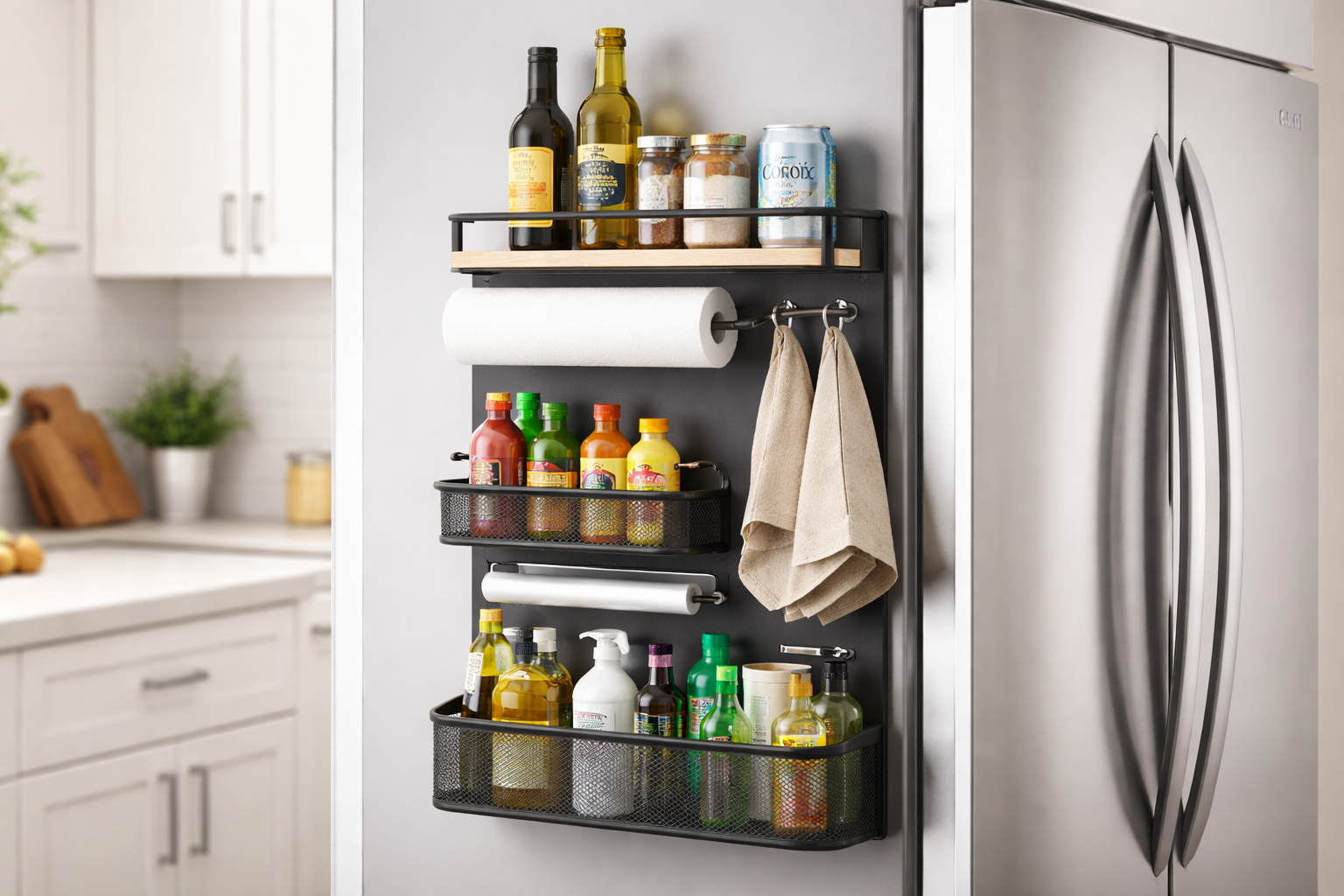
magnetic fridge organizer, magnetic spice rack, magnetic storage—these smart solutions completely change how you store, sort, and declutter in the kitchen. Whether you need extra space for spices or want everyday cooking tools within arm’s reach, magnetic storage can help—if you avoid a few common mistakes.
Key Takeaways
- Magnetic fridge organizers save real counter space, but strength and surface compatibility are critical.
- Most issues come from overloaded racks, curved or non-magnetic fridge doors, and scratch risks.
- Choosing quality and placement prevents nearly all the most common problems.
- What Are Magnetic Fridge Organizers? (The Core Concept)
- How to Use Magnetic Storage Right: Step-by-Step Guide
- Advanced Analysis & Common Pitfalls
- Conclusion
- Frequently Asked Questions
What Are Magnetic Fridge Organizers? (The Core Concept)
Magnetic fridge organizers, magnetic spice racks, and magnetic storage units are space-saving tools that attach to your refrigerator’s surface using built-in magnets. Instead of letting clutter eat up your kitchen counter, you can mount shelves, racks, or tins precisely where they’re needed—without drilling or hardware.
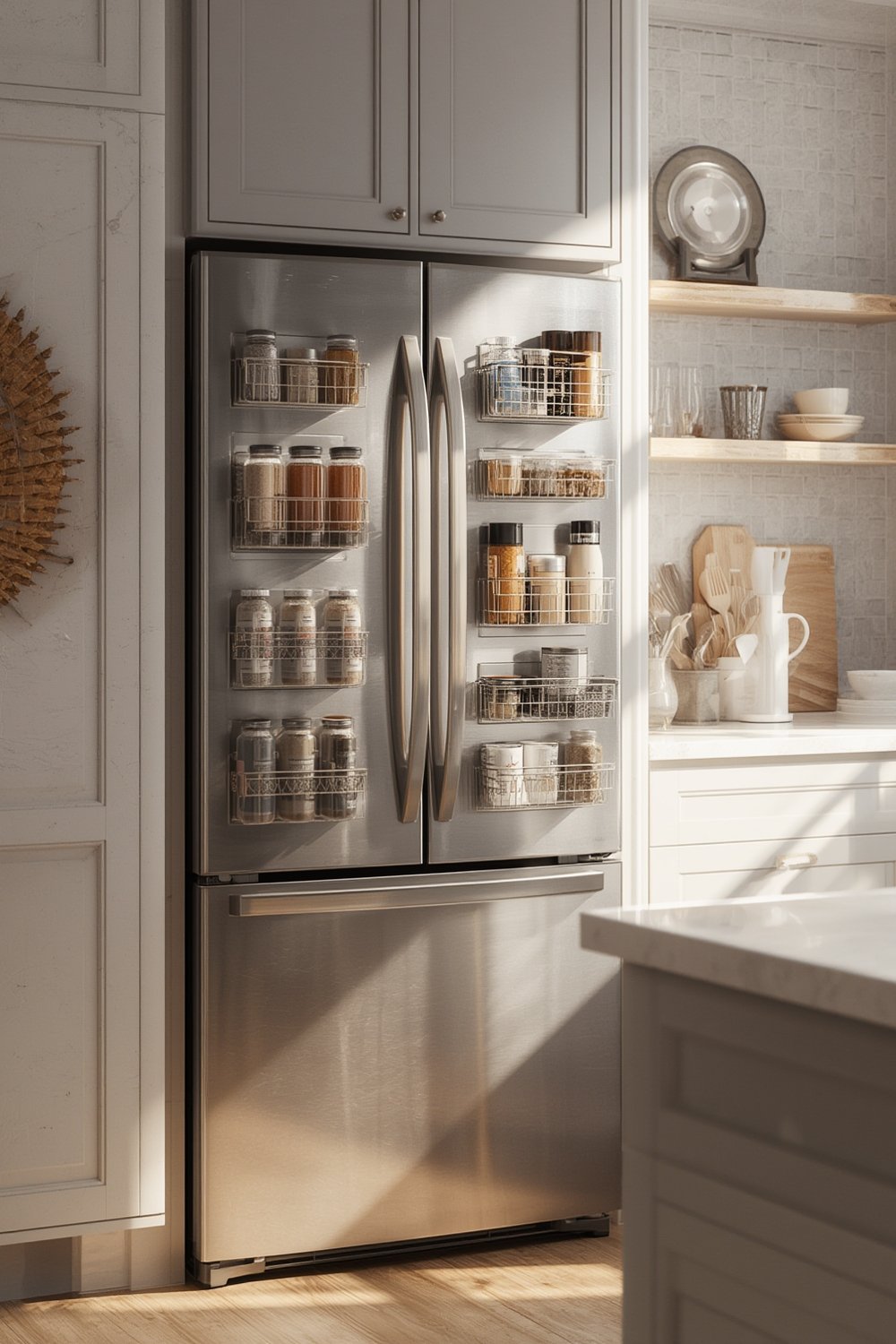
This concept works especially well for storing spices, oil bottles, condiments, paper towels, or utensils, and is ideal for small kitchens, rental apartments, or anyone who wants flexible storage with no permanent marks.
The growing kitchen storage market reflects this trend. Analysts estimate the global kitchen storage and pantry market is USD 137.36 billion in 2024 and climbing fast. Magnetic storage is a rising niche due to online shopping’s double-digit growth and the ongoing need for decluttering.
To summarize: magnetic fridge organizers let you use vertical space on your fridge for maximum kitchen efficiency and flexibility—if you choose the right product and place it well.
How to Use Magnetic Storage Right: Step-by-Step Guide
Magnetic storage offers true versatility, but only if you do a few things right. Here’s how to avoid disappointment and get perfect results every time—whether it’s a magnetic fridge organizer, spice rack, or full storage system.
-
Test Your Fridge’s Magnetic Zones
Use a cheap fridge magnet and run it over every surface—front, sides, corners. Take notes on which panels are magnetic and how strong the pull feels. Some fridges, especially those with fancy stainless fronts or panel-ready finishes, are only magnetic on the sides. -
Pick the Right Rack for Your Needs
Match the rack size and shape to what you want to store. For heavy glass spice jars or oil bottles, opt for organizers rated for at least 15 lb capacity and avoid shallow shelves (look for higher side rails). Small magnetic tins are perfect for lightweight spices or pins. Need multipurpose storage? Consider modular, stackable sets. -
Inspect Magnet Type and Padding
High-end models use neodymium magnets, often specified as N35 to N52 grade. These offer much stronger pull than ceramic/ferrite magnets—just as the premium knife holder market has shown. Look for protective pads (EVA, silicone) to prevent scratching. If you can’t find specs, play it safe and use a scratch guard between magnet and fridge. -
Install on a Flat, Rigid Surface
Place racks on flat, untextured surfaces for maximum grip. Avoid curves, ridges, or seams. For heavier items, choose zones close to fridge frame edges, not in the middle of thin metal panels. -
Stay Under Safe Load Limits
Don’t trust optimistic marketing claims. In real use, aim to load racks to 50-70% of claimed max weight. This helps avoid slipping or sudden falls when the door opens or closes (dynamic force). -
Check Door Swing and Clearance
For side-mounted organizers, open your fridge door fully and verify there’s room between the rack and adjacent walls or cabinets. Watch for interference, especially in galley or small kitchens. -
Maintain and Clean Regularly
Wipe down racks and fridge contact points to avoid debris buildup that causes scratches. Remove and inspect padding every month or when reorganizing (especially for rust on carbon steel).

If you’re interested in maximizing every storage option in your kitchen, check out our detailed guide on kitchen organization secrets for deeper strategies.
Still unsure about which rack fits your needs? Our expert reviews of fridge side organizers can help you compare options and read real-world feedback.
Advanced Analysis & Common Pitfalls
Buying a magnetic fridge organizer looks simple, but users run into recurring problems. Here are the top issues—plus key differences between premium and low-end products.
Comparison: High-End vs Low-End Magnetic Storage Options
| Feature | High-End Organizers | Low-End Organizers |
|---|---|---|
| Material | Powder-coated or stainless steel, thick gauge | Thin steel, wire, or mixed metals with paint |
| Magnet Type | Large neodymium (grade N35–N52) with soft backing | Small ferrite/ceramic or low-spec neodymium, exposed edges |
| Load Limit (Per Rack) | 15–30 lb (realistic), with published test data | 5–10 lb (marketing claim only; real use <7 lb) |
| Padding/Scratch Protection | Full rubber/silicone/EVA pad coverage | Minimal or no protection |
| Surface Fit/Grip | Stable on flat and most side panels | Prone to wobble, skidding on curves or painted/textured fronts |
| Corrosion Resistance | Powder coat or stainless resists rust | Exposed steel often rusts in humid kitchens |
| Price Range (2024) | USD $40–80+ (multi-piece sets, high capacity) | USD $12–20 (basic single racks; limited load) |
- Slipping and Load Failure: Most magnetic organizer complaints stem from racks sliding down or tilting, often because the claimed weight capacity is exaggerated. Kitchen door movement adds real force, so underloading and careful placement matter.
- Compatibility Issues: Wide flat areas on fridge sides are best. Non-magnetic stainless steel fronts won’t hold any organizer. Testing before purchase saves frustration (and money).
- Surface Damage: Scratches, scuffs, or “walking” organizers are almost always due to hard, unpadded magnets, and debris between the rack and fridge. Always use a buffer and clean both surfaces.
- Rust and Cleanability: Cheap painted steel is prone to rusting, especially with kitchen humidity and regular contact with wet hands or jars. Removable drip trays and powder-coated models last longer.
- Misfit and Ergonomics: Racks that are too narrow, shallow, or have low rails might not fit your everyday spice jars or bottles. Measure before you buy, or consult this magnetic organizer size guide for typical product specs.
Another rarely-covered topic is long-term safety or impact on appliance finishes. For a deeper discussion of fridge compatibility and safe use over years, check out fridge magnet safety FAQ.
Conclusion
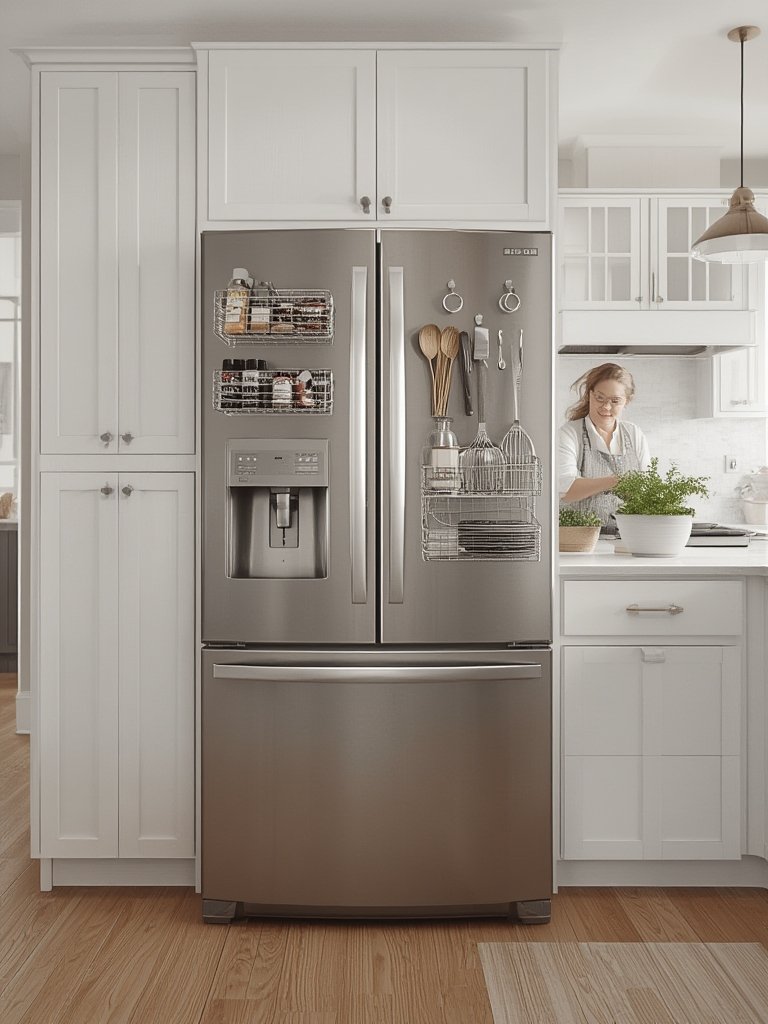
With the right magnetic fridge organizer, magnetic spice rack, magnetic storage system for your kitchen, you’ll enjoy a tidier counter and more accessible supplies—if you pay attention to quality and correct placement. Remember to check your fridge’s magnetic zones, avoid overloading, and protect surfaces to prevent scratches. Want to start organizing? Browse the best magnetic fridge organizers or compare models in our magnetic kitchen storage roundup and transform your kitchen this week.
Frequently Asked Questions
Will a magnetic fridge organizer work on every refrigerator?
No. Many new stainless steel fridges, especially front panels, are not magnetic. Always test with a standard magnet before buying a rack. Side panels are more likely to be magnetic, but built-in or wood-panel fridges rarely work.
How much weight can a magnetic spice rack safely hold?
Premium models can realistically support 15–30 lb per rack on flat, magnetic steel sides, but it’s safest to load at 50–70% of the advertised limit. Cheap racks often slip below 8 lb—don’t overload.
Can magnets damage my fridge?
Over time, hard, unpadded magnets or heavy loads moved repeatedly can cause scratches or slight dents. Use organizers with full pad backing and never drag loaded racks to avoid marks.
What if my fridge is not magnetic?
You can return the organizer (if unused), use it on another steel appliance, or mount it on a metal utility rack or wall using screws or adhesive (if the brand allows it). Alternatively, look for non-magnetic cupboard organizers.
How do I prevent rust or finish wear on magnetic storage racks?
Choose powder-coated or stainless steel models for kitchens with high humidity. Wipe down racks frequently and immediately dry any spills. Avoid exposing basic painted steel racks to water or acids (like vinegar).