

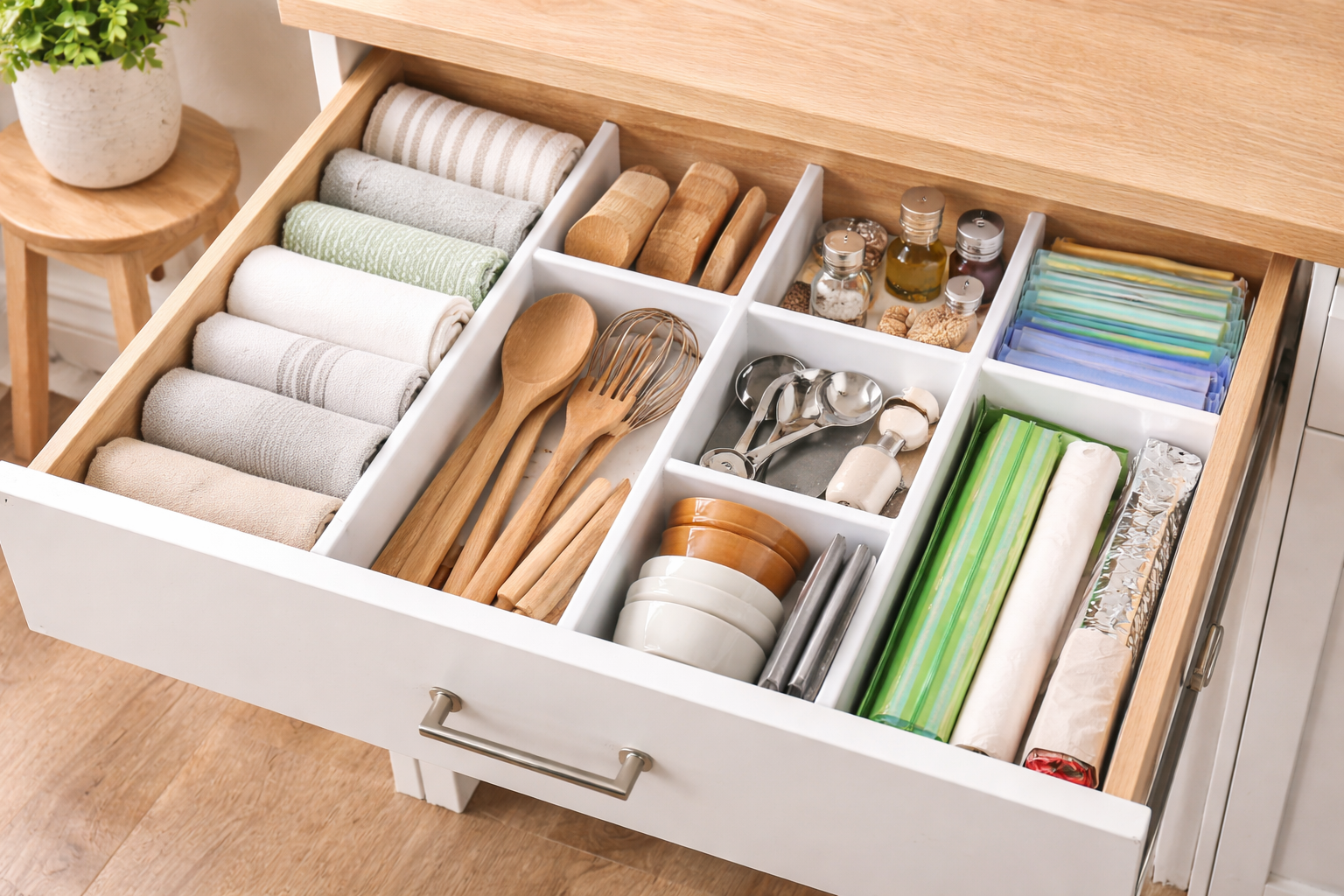
drawer dividers,adjustable drawer dividers,drawer organizer are now essential tools for anyone seeking real, lasting order in kitchen, office, or bathroom drawers. The days of chaotic “junk drawers” and hunts for missing utensils are ending—with the right strategies, these flexible solutions restore calm and save time.
Key Takeaways
- Adjustable drawer dividers and organizers are booming in demand thanks to home improvement trends and the shift to online shopping.
- The best results come from careful sizing, choosing the right material, and knowing common pitfalls—especially around fit and durability.
- Brands and articles often gloss over cleaning, noise, fit issues, and true long-term decluttering impact—real users face these daily.
- How Adjustable Drawer Dividers Work—and Why They Matter
- How to Organize Any Drawer Step-by-Step (Works for Kitchens, Office, Bath, More)
- Real‑World Pitfalls and How to Avoid Them
- Conclusion: Are Drawer Dividers Worth It?
- FAQ: Drawer Dividers, Adjustable Systems, and Drawer Organization
How Adjustable Drawer Dividers Work—and Why They Matter
Adjustable drawer dividers are sliding or spring-loaded bars, trays, or modular panels that create custom compartments inside any standard drawer. Unlike old-fashioned fixed trays, you can expand or compress them to fit different drawer widths and change your layout as your storage needs shift. This makes them ideal for kitchens with deep or oddly sized drawers, offices, or anywhere clutter accumulates.
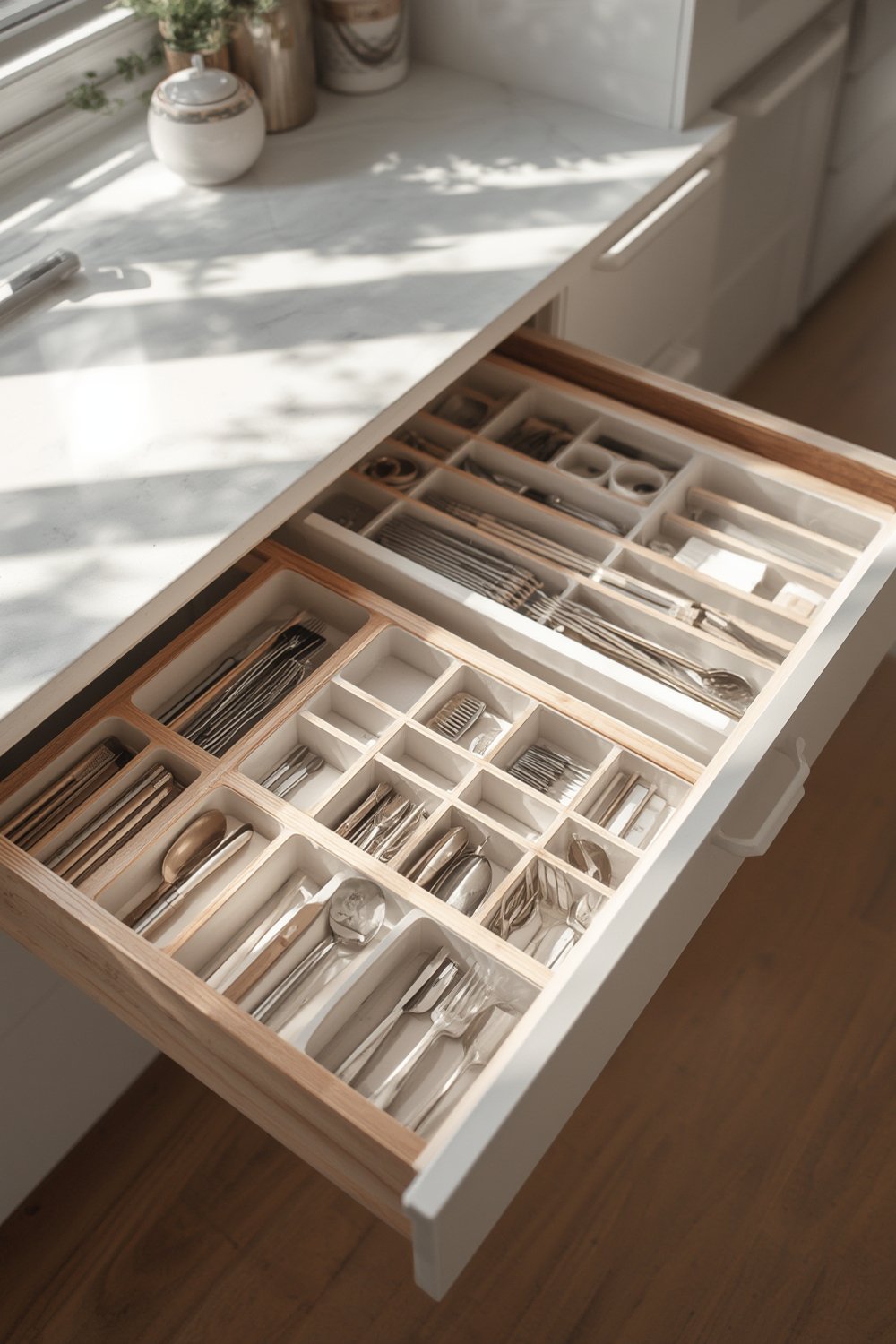
In 2024, demand for drawer organizers is surging. The global market for drawer dividers alone is estimated at over USD 2.18 billion. Adjustability is now a top requirement—no one wants to be stuck with rigid compartments that don’t match their needs.
Why bother at all? Research and mountains of user reviews show that when every item has a defined space, you’ll spend less time searching, avoid accidental duplicates, and experience less stress. But the wrong divider—one that slips, cracks, or warps—can do more harm than good. The goal isn’t just to buy something labeled “drawer organizer”—it’s to install a tailored, stable system that lasts.
When evaluating adjustable drawer dividers versus traditional organizers, remember that it’s not just about the look. Consider the fit range, spring tension strength, material quality, and ongoing maintenance—all factors often missed in quick-buy guides. We’ll break down exactly how to avoid the usual pitfalls and choose the right solution below.
How to Organize Any Drawer Step-by-Step (Works for Kitchens, Office, Bath, More)
- Empty and Sort: Take everything out. Group similar items—utensils, gadgets, tools, cosmetics, etc.—and declutter duplicates or broken things. (Tip: Set aside things you haven’t used in a year.)
- Measure Accurately: Use a tape measure for inside width, depth, and height of each drawer. Write these measurements down. Pay special attention to any hardware (like center rails or slides) that shrink usable space.
- Select the Right Divider: Choose adjustable dividers with a min-max range that fits inside your measured drawer width. For kitchen or craft drawers, consider modular systems with crossbars, not just single “walls.”
- Plan Your Layout: Arrange items by frequency of use and height. For deep drawers, get taller dividers; otherwise, flat utensils may jump compartments if the divider is too short.
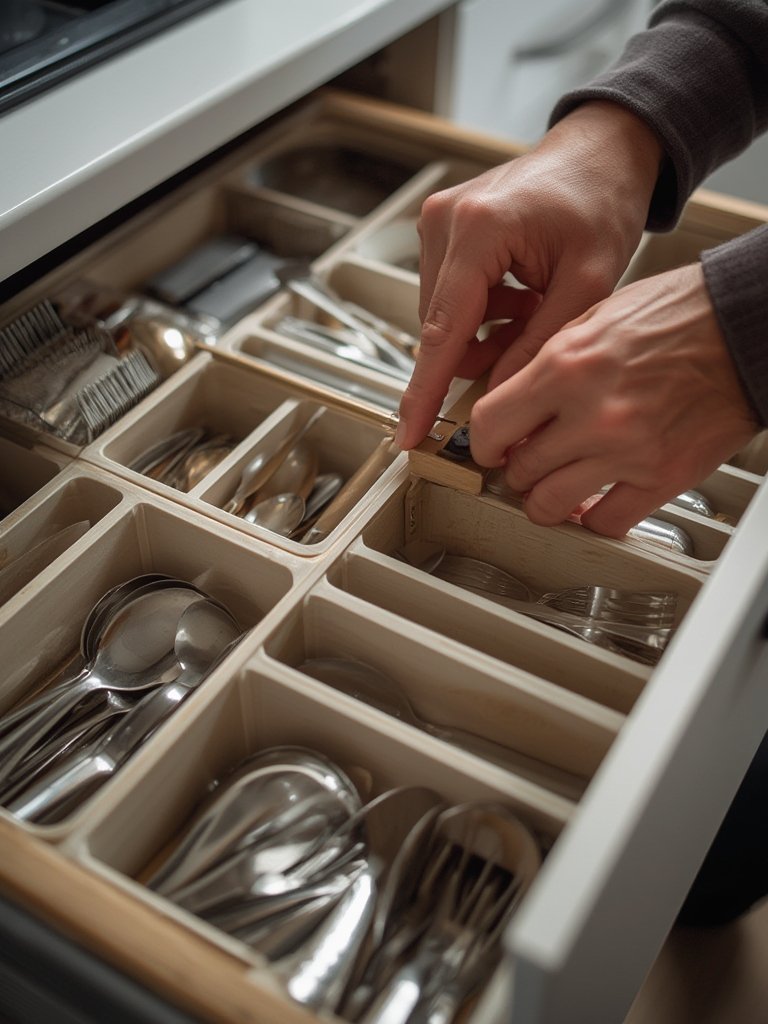
- Install Carefully: Follow product instructions—usually you compress spring-loaded dividers, press firmly into place, and ensure anti-slip feet contact the drawer walls. For track-based frames, extend and lock the mechanism.
- Test and Adjust: Add your items, gently open and close the drawer several times, and check for slippage or items jumping compartments. Adjust spacing or divider tension if needed.
- Finalize Zones and Label (Optional): If sharing the drawer with others or managing kids’ items, labels can reinforce good habits. For best results, always return items to their designated spots.
- Deep kitchen drawers? Try a tall bamboo divider or modular tray system.
- Small office drawers? Look for compact expandable dividers suited for limited space.
- Need more versatility? Consider systems that combine crossbars and adjustable walls for infinite configuration.
Be patient—finding the best layout may take a few tries. But once organized, maintenance is simple: just keep items in their zones and adjust as your storage needs change.
Real‑World Pitfalls and How to Avoid Them
Not all drawer dividers live up to their marketing. Here’s what buyers and home organizers encounter most often—and how to sidestep failure.
Common Complaints and User Risks
- Slippage & Poor Fit: Spring-tension dividers may slide or pop loose if the anti-slip pads are too short or the drawer bottom is slick. Oversized drawers can make dividers feel flimsy, especially at full extension. Always double-check the usable fit range. Read market research for details.
- Material Issues: Thin plastic dividers may crack or rattle under heavy loads; bamboo can warp or split in humid kitchens. Metal systems are strong but may scratch or be noisy. The table below compares the main options.
- Cleaning and Maintenance Challenges: Crumbs, oil, and spills can accumulate in divider joints—especially in spring mechanisms or telescoping seams. Only some plastic systems are dishwasher-safe.
- Misleading Measurements: Many returns result from dividers being taller than the internal drawer height or not compressing enough for narrow drawers. Take measurements yourself and ignore “universal fit” claims.
- Blocked Drawers: Tall dividers or those used with bulky items can keep the drawer from closing fully—especially with knives or large spatulas. Mind vertical clearance!
| Material | Pros | Cons | Maintenance | Sustainability |
|---|---|---|---|---|
| Bamboo / Wood | Rigid; attractive; more eco-friendly label | Prone to warping/splitting in humidity; rough edges | Damp-cloth only; needs conditioning | Renewable if processed responsibly |
| Plastic (ABS, PP) | Lightweight; moisture resistant; easy to clean | May crack at joints; can deform under heavy loads | Wipe-clean or dishwasher-safe (some models) | Not biodegradable; recyclability varies |
| Metal (Aluminum, Steel) | Very strong; long-lasting; highly recyclable | Heavier; may scratch/noisier; rust if uncoated | Easy wipe; avoid abrasives | High upfront energy but lasts long |
Feature & Mechanism Comparison
- Spring-Loaded/Tension: Fast install, but can slip or weaken over time.
- Manual Lock or Ratchet: Greater stability—less likely to lose grip, but requires more precise setup.
- Slot/Track Systems: Enable fully modular layouts, but less flexible for non-rectangular drawers.
Competitor articles often skip long-term drawbacks—like spring fatigue, the impact of humidity on bamboo, and noise or cleaning headaches. For a more realistic review, see our durability testing series.
For kitchen-specific advice, consider how you’ll clean the dividers, especially if you routinely deal with grease or flour spills. And don’t forget that without consistent habits—returning items to their spot—even the best-adjusted system will slowly devolve into chaos.
Conclusion: Are Drawer Dividers Worth It?
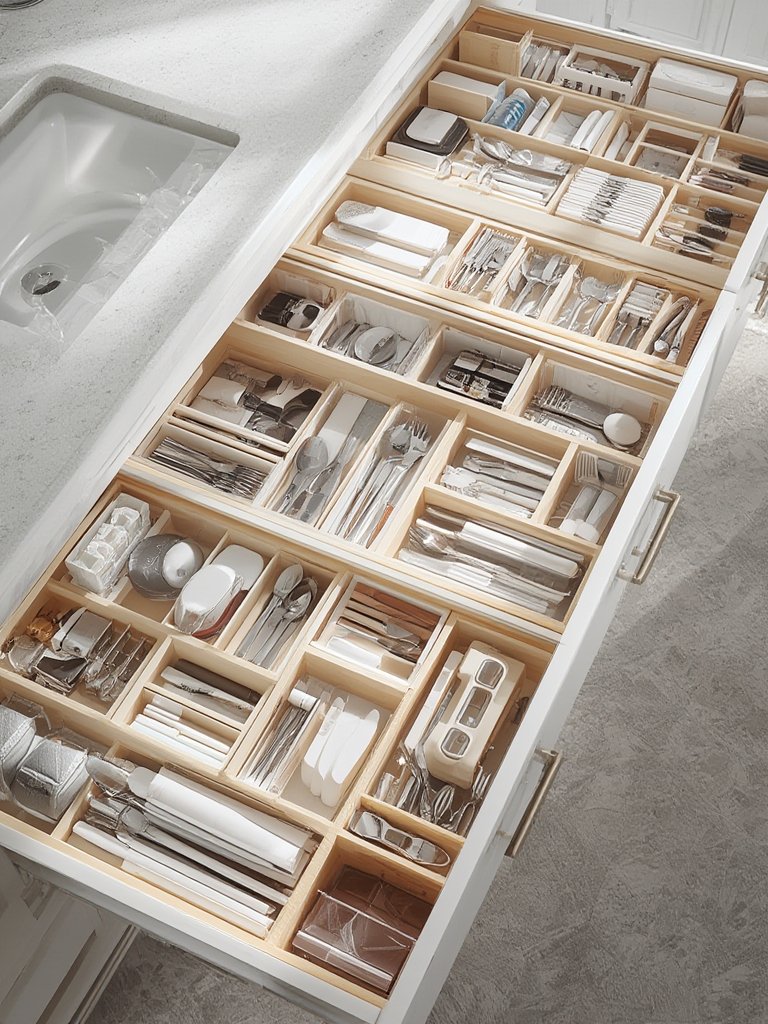
For most homes, a well-chosen drawer divider, adjustable drawer divider, or versatile drawer organizer is absolutely worth the investment. They boost daily efficiency, minimize clutter, and help everyone in the household stick to organization habits. Still, beware of fit range exaggerations, slippage, and shortcut materials—read real reviews, check measurements, and be realistic about what your drawer and contents demand.
Ready to cut drawer chaos for good? Start by measuring accurately and picking adjustable drawer dividers built for lasting stability. You’ll feel the difference every time you open a drawer—guaranteed.
FAQ: Drawer Dividers, Adjustable Systems, and Drawer Organization
How do I know if a drawer divider will fit my drawer?
Always measure the internal width, depth, and height of your drawer. Check the product specs for minimum and maximum extension—and watch out for any hardware inside the drawer that might block fit. Aim for at least 1/4″ clearance on all sides for easy installation.
Which material is best: bamboo, plastic, or metal?
Bamboo looks great and feels sturdy but may warp in humid kitchens; plastic is easy-care and affordable but can crack; metal is the longest-lasting but heavier and sometimes noisier. Choose based on the climate, how much abuse your drawer takes, and if appearance or eco-friendliness is most important to you.
Are adjustable drawer dividers suitable for deep drawers or odd shapes?
Many adjustable dividers have models designed for deep drawers (4-5″ high). Modular slot systems or those with stackable options can handle odd layouts. Always check the manufacturer’s diagrams and size charts before buying.
How do I keep my dividers from slipping?
Non-slip drawer liners and silicone pads on the divider ends help most. For slick surfaces, consider adding small dots of museum gel or clear putty under the divider feet for extra grip.
Are dividers easy to clean, and do any work with dishwashers?
Plastic dividers are usually the easiest to clean—some are top-rack dishwasher safe. Bamboo should only be wiped with a damp cloth and never soaked. Metal is low-maintenance but keep it dry to avoid rust if it’s not coated.