

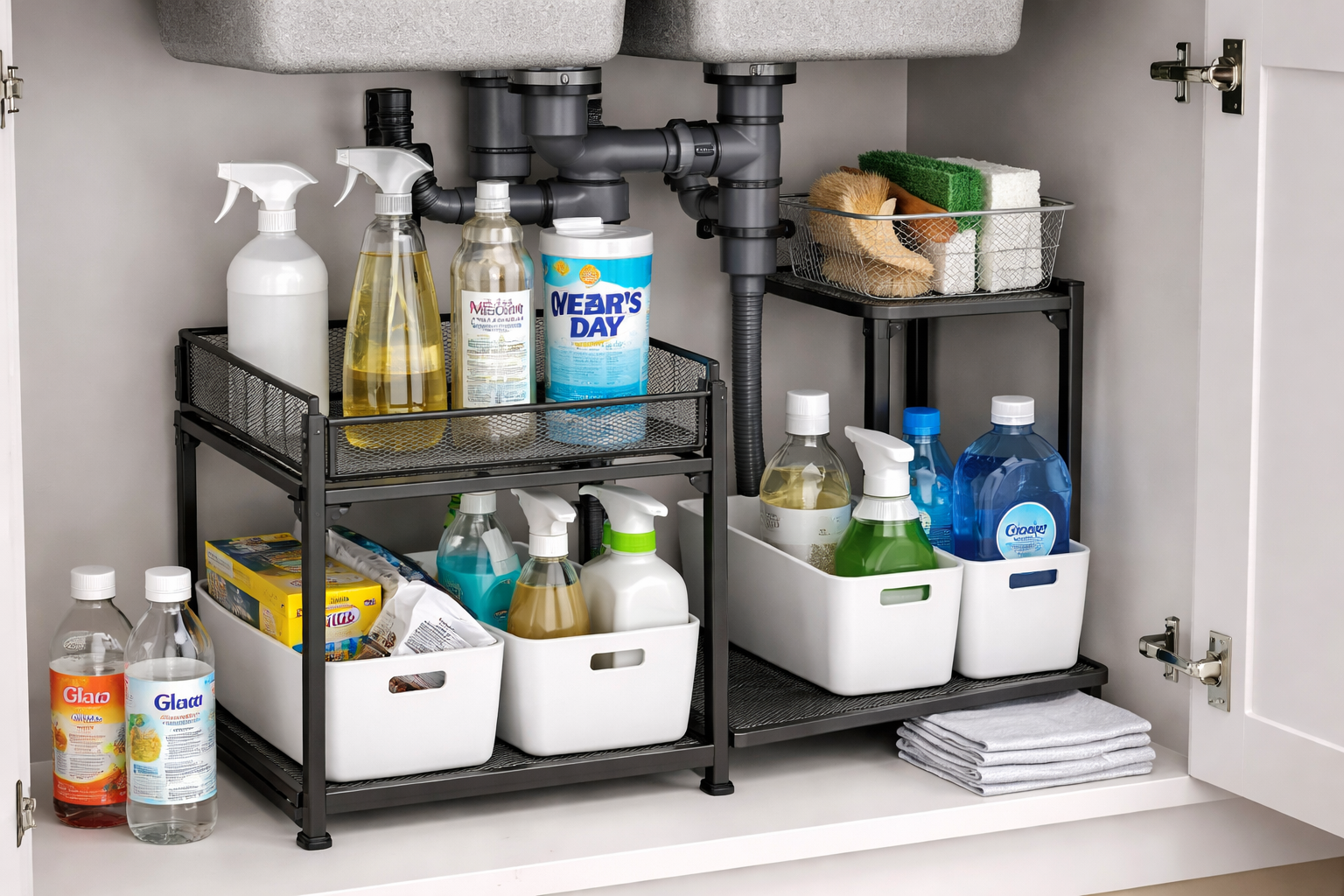
Under sink organizer, sliding under sink organizer, under sink storage solutions have become essential for maximizing space and reducing clutter in modern kitchens and bathrooms. With homes getting smaller and cabinets tighter, these organizers now play a critical role in everyday efficiency—but not all products work perfectly for every cabinet.
Key Takeaways
- The global under sink organizer market is growing rapidly due to urbanization and demand for modular kitchens.
- Carefully measure and plan for pipes, plumbing, and cabinet size before buying a sliding under sink organizer.
- Common pitfalls include poor fit, plumbing interference, subpar materials, and unclear specs—do your homework to avoid costly returns.
- 1. The Core Concept: What Is an Under Sink Organizer and Why Use One?
- 2. Step-by-Step Guide: How to Choose and Install the Right Under Sink Storage
- 3. Advanced Analysis & Common Pitfalls in Under Sink Organizer Installation
- 4. Conclusion
- 5. FAQ
The Core Concept: What Is an Under Sink Organizer and Why Use One?
An under sink organizer is a specialized storage solution designed to fit into the often chaotic cabinet space beneath sinks. This area is tricky: it usually houses plumbing, traps, and sometimes garbage disposals or water filters. A sliding under sink organizer adds the convenience of pull-out access, bringing items to you instead of making you reach awkwardly. Demand for effective under sink storage is growing, fueled by the rise of urban living, compact kitchens, and the universal need for better organization.
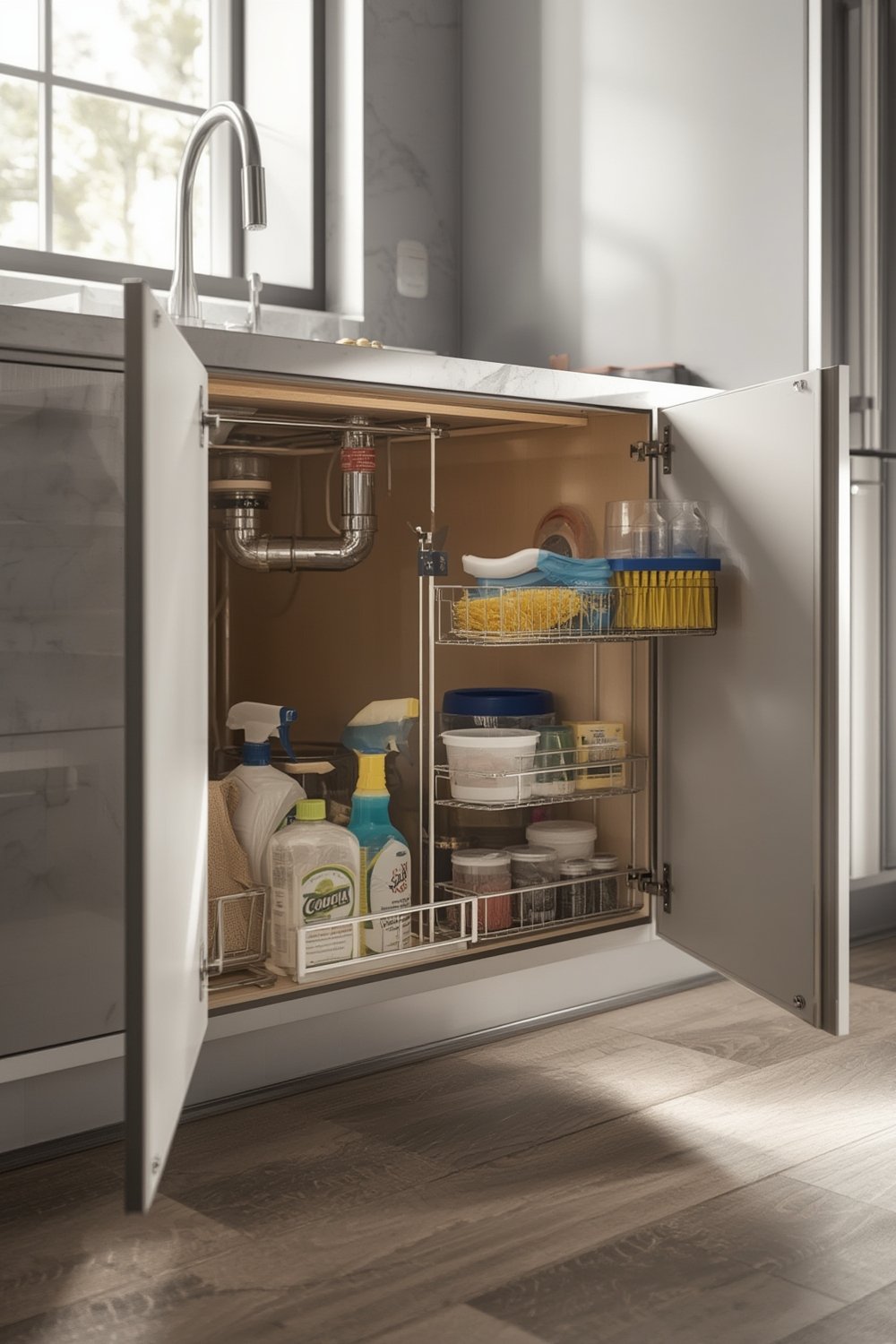
According to recent reports, the global market for under sink organizers reached over USD 2.1 billion in 2024 and is growing each year. Metal and adjustable plastic models lead sales, especially in modular or urban kitchens where space is tight and every inch counts. The popularity of sliding (pull-out) organizers continues to climb [Growth Market Reports], since they offer far easier access compared to fixed or stacked bins.
Most importantly, an organizer that serves you well will prevent clutter, protect the cabinet from leaks, and simplify daily chores. But not all solutions fit all spaces, and installation can be more challenging than it looks.
Step-by-Step Guide: How to Choose and Install the Right Under Sink Storage
Installing an under sink organizer is more than just picking one off the shelf. You need to consider cabinet dimensions, plumbing layout, material durability, and your own DIY skill level. Here’s how to do it right:
- Map your space and obstacles.
- Check for P-traps, garbage disposals, water filters, and shutoff valves.
- Measure interior width, depth, and clear height—not just the outside.
- Refer to Best Kitchen Organization Solutions for measuring tips and cabinet mapping ideas.
- Pick your organizer type.
- Freestanding adjustable: Best for renters, simple installs. Lightweight, but lower weight capacity.
- Sliding/pull-out (mounted): Requires screws and careful alignment, but offers superior access and durability. Suits wider, deeper cabinets.
- Consult Kitchen & Bathroom Storage Ideas for more examples.
- Match organizer specs to your cabinet.
- Watch out for shelf heights, handle protrusions, and rail length (which can add 1-2 inches over stated product size).
- Account for any tilt or tray mechanism if sliding out is tight.
- See Ways to Maximize Small Cabinet Storage for tips.
- Double-check material and load rating.
- Choose stainless steel or powder-coated metal for humid environments, especially if leaks are possible.
- Check that shelves can support gallon bottles or other heavy cleaners. Overloading is a frequent cause of breakage.
- More anti-rust storage tips here.
- Install with care (if drilling is required).
- Use a template or painter’s tape to mark mounting holes before drilling—especially in thin or particleboard cabinet floors.
- If you rent, consider freestanding or adhesive-based organizers instead of drilled pull-outs.
- For double-door cabinets, center the frame to avoid doors colliding with the organizer.
- Refer to How to Organize Beneath Your Sink the Right Way for advanced layout tweaks.
- Organize items by height and usage frequency.
- Place tall spray bottles on the lower tier, small items in upper baskets or trays.
- Add caddies or dividers for categories like sponges, dish soap, or trash bags.
- Clean and maintain regularly.
- Wipe shelves and trays. If you have a sliding unit, lubricate the rails with food-safe silicone spray if they start to squeak.
- Check for rust or plastic wear—catch issues early to extend the organizer’s life.
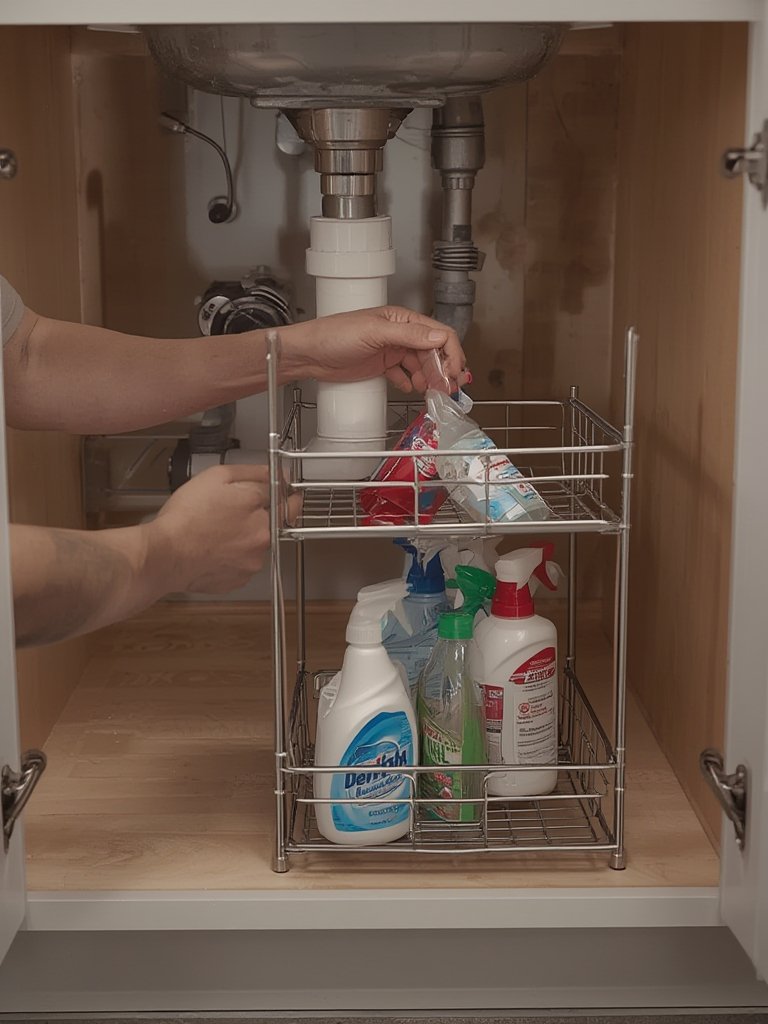
Advanced Analysis & Common Pitfalls in Under Sink Organizer Installation
Despite their popularity, installing an under sink organizer is not always straightforward. Here are the pitfalls and realistic challenges you need to be aware of, based on extensive market and consumer research:
- Poor fit in tight or obstructed cabinets: Organizers commonly fail to clear garbage disposals or plumbing. Always compare actual (not just listed) dimensions, including rails and mounting hardware. Face-frame cabinets may limit the opening width—don’t get caught out.
- Material failures: Chrome wire rusts quickly under sinks, especially if leaks occur. Light plastic trays may bow under large bottles. Invest in heavy-duty or rust-resistant models for humid spaces.
- Limited adjustability: Many “adjustable” models only move a little. Customization around pipes can be quite restricted. Modular units with removable shelves or side trays offer the most flexibility.
- Sliding and alignment problems: Mounted sliding units can jam if rails are misaligned by only a few millimeters. Cheap slides often stick or bend under full weight, especially in full-extension trays.
- Hard installation: Drilling into thin cabinet floors can crack the base or lead to screws ripping out. Mounting templates are not always supplied or are inaccurate.
- Tipping and instability: Narrow or tall freestanding organizers may tip, especially on glossy or lined cabinet floors. Look for wide, non-slip feet or consider methods to anchor the base.
- Difficult cleaning: Many tiered frames are not removable. Spills from plumbing leaks may pool in hard-to-clean corners or under trays. Quick-release trays are ideal for maintenance.
- Noisy operation: Lack of soft-close or bumpers means some pull-outs crash noisily into cabinet frames, especially when loaded.
- Missed features: Integrated holders for trash bags or caddies are still rare, despite common consumer requests.
| Type | Typical Dimensions | Weight Capacity | Main Material | Pros | Cons | Best For |
|---|---|---|---|---|---|---|
| Freestanding Adjustable (Plastic/Metal) | 11–12″W x 14–16″D x 11–15″H | 15–25lb/tier | Plastic + Steel | No drilling, fits most cabinets, modular | Lower weight, less stable, can tip | Rental homes, DIY-averse |
| Sliding/Pull-Out Mounted (Metal) | 11–14″W x 19–22″D x 14–17″H | 30–50lb/tier | Chrome/Stainless | Full access, high load, durable | Needs drilling, higher price, harder install | Permanent homes, heavy storage |
| Single-Tier Wire Basket Pull-Out | 11–12″W x 18–21″D x 5–7″H | 20–50lb | Steel Wire | Easy access, fits most base cabinets | May rust, needs screw install | Shallow or narrow cabinets |
If you’re concerned about any of the issues above, check independently written guides such as KitchenCortex’s under sink organizer guide and the latest market research reports for updates about features and pitfalls in 2024. For commercial applications or advanced design, review industry analysis on kitchen storage & organization markets for load, code, and hygiene requirements.
Conclusion
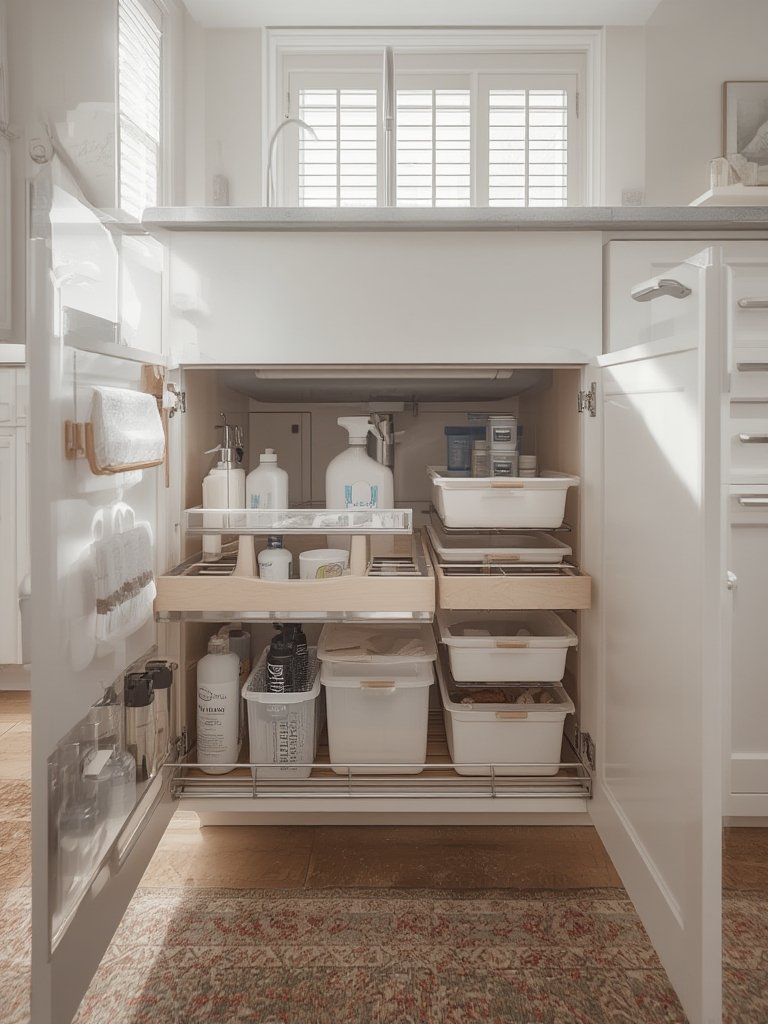
With demand for under sink storage solutions at an all-time high, consumers face more choices—and more potential pitfalls—than ever. The key to getting the right under sink organizer, sliding under sink organizer, under sink storage is careful measurement, understanding your cabinet’s unique obstacles, and focusing on quality materials. Don’t let flashy marketing promises trick you into buying the wrong fit for your space. Review the actionable steps above, learn from buyer experiences, and invest in organizers that will serve you for years, not months. Ready to reclaim your cabinet space? Start planning your upgrade today!
FAQ
What type of under sink organizer is best for very small cabinets?
A narrow freestanding adjustable organizer, ideally with removable shelves, is usually the best choice for small or oddly shaped cabinets. Measure clear width and height, and avoid models with protruding handles or non-removable trays.
Do sliding under sink organizers require drilling?
Yes, almost all true sliding (pull-out) under sink organizers require screwing slides or frames to the cabinet floor for stability. If you cannot drill, choose a freestanding or adhesive-mounted organizer instead.
How do I stop an organizer from tipping when I pull out the basket?
Select organizers with wide non-slip feet or, for wire baskets, secure the rear frame with extra screws. On glossy or lined floors, adding rubber shelf liner beneath the unit often helps prevent sliding or tipping.
Which materials resist rust best under kitchen sinks?
Stainless steel, powder-coated metal, and high-grade ABS plastic offer the best rust and corrosion resistance in humid cabinet conditions. Avoid chrome-plated or untreated metal.
Are there under sink storage solutions for apartments or rentals?
Yes. Look for freestanding adjustable organizers or stackable bins that require no drilling. These are removable and won’t damage cabinetry, making them ideal for rental properties.
—